Showing posts with label journalism. Show all posts

July 28, 2016

July


So when did July arrive and when did it decide to disappear so quickly? For the longest time in my life, July was synonymous with holiday or at the very least, anticipating some sort of travel. I can only think of two or three Julys which I entirely spent in one place (usually, Oman), going about my daily life while simultaneously wishing every day that I was on a plane or train or car and heading somewhere.


This July was fortunately no exception though; I have just returned from a hectic five day trip to Bangalore, where I joyously glimpsed numerous gorgeous trees (Bangalore trees, you have my heart), colonial mansions turned into hip contemporary spots, beautiful fresh rangoli decorating the thresholds of homes everymorning, winding roads, overdressed sari shop window displays,  the famous Bangalore weather, and finally, consumed a lot of goodies from Bangalore bakeries and an authentic bene dosa from CTR in Malleshwaram. It was such a good dosa that I doubt that I will be eating one for a while in Delhi without remembering its Bangalore counterpart's finger-licking buttery, goldeny goodness!


However, my two most favorite memories involved visiting National Gallery of Modern Art and spending a very happy three hours discussing everything under the sun and its beautiful, beautiful spreading, giving, warm trees with Vidya, turning our so far virtual friendship into a face to face one. I also spent a peaceful twenty minutes wandering around the gardens of the gallery before she arrived; it was especially such bliss to be in the proximity to this enormous, spreading, long-limbed rain-tree,  whose formidable presence dominantly permeated the whole garden and yet, there was such serenity to be found standing beneath it. 


The other memory involved visiting a quaint little second-hand bookshop, The Select Bookshop at Brigade road; my husband used to buy a lot of books from there when he was growing up in Bangalore and I was charmed by how the book-shop owner greeted him, asking where he had been all this time. Having either shopped from chain-store bookstores or ordering books online lately, I had only heard of such bookshops, where the owners knew your name, thoughtfully recommended books, and took the trouble to find them for you from the depths of the crammed bookshelves. Vidya had also recommended the bookstore to me when I had mentioned wanting to visit another famous Bangalore bookshop, Blossom. It was so calming to stand there and browse through the books whilst soaking in in the wistful-making smell of old books and thinking of the journeys they had travelled when espying years-old inscriptions written in them. I even spotted a book edited by one of the first persons I had followed on Instagram many years ago! Needless to say, I left the bookshop, armed with several new old books that I cannot wait to read.


July has also seen me making my Guardian debut. I am happy to share about my first piece for the Guardian; it is an insider's guide to Jodhpur, where I wrote about its architecture, music, food, green initiatives, art, and more. Writing about cities and that too one of my most favorite cities in the world? I couldn't be more glad! Have a read here!

My other published writing this month was about how collaging and scrapbooking has helped me write better; there is something so orderly about assembling your otherwise scattered thoughts into a jigsaw of collage and watercolor before proceeding to sit down and write.

The rains have poured down this year, walls of rains sheeting down throughout the night until dawn, accompanied by sauna-like humidity, which I am not too terribly fond of. However, all is forgiven when you glimpse how incredibly green everything is! The trees have shed their summer skin of dust to reveal a brand new green being beneath. I have reveled in clicking the green, the rain-drop jeweled flowers, the redness, the greenness, the pinkness of it all. What I especially loved chancing upon was how I found a beautiful, intact, yellow-hued white plumeria bloom only to see that someone had made an arrangement out of few upturned plumeria flowers. Those serendipitious discoveries make my day, honestly speaking!

So this has been my July so far. How has yours been?

February 26, 2015

A Semblance of Spring in the Air


The winter is nearing its conclusion over here - and I can smell a semblance of spring in the air. However, I can't help but think about spring in a city in a country thousands of miles away though. At the moment, it is probably bone-white and a punch-in-the-solar-plexus cold and unrelentingly blank there; yet, there are also stubbornly budding trees, determined to fruit and flower in spite of the cold and ice. Isn't it the season of magnolias? Have the cherry blossoms emerged yet? I suddenly experience a strong, almost unbearable nostalgia, imagining standing on my Pittsburgh apartment balcony and witnessing the dead landscape gradually being resurrected in the months to come.


Fish-flowers


However, this much I acknowledge: nature offer its gifts wherever you go. There will be new trees and flowers to encounter over here too. In the meantime, I see paint daubs of orange and red everywhere, even in cloth bundles unspooling on the ground. Bright orange flowers erupt like fishes shimmying in and out of a choppy green sea.


Illumination


Red in Death

Fat, flamboyant, maximalist orange flowers illuminate an otherwise austere tree; nudged on by the dusk breeze, they gently fall, descend and lie upon the ground, turning blood-red as they decay. I must find out their name, I really must. From my study window, I can see nests sharing branch-space with fat chocolate brown seed pods on the tree growing outside. I collect fallen leaves, flowers and seed-pods; I photograph them, I make whimsical little arrangements out of them and leave for passerby's to discover.

Suspended, in hope

Wherever I have lived, whichever place I have called home, there has been a tree growing outside my window; its branches, whether leaf-laden or not, have represented an embrace, that of hope and succor.
A few days ago, while walking past a fledgling tree in my neighborhood park, I noticed something hanging from its branch; I went closer towards it and realised the object was a tiny glass square wrapped multiple times in green spring and in turn suspended from the branch. What was it? Who had put it there? I mused that it resembled a protective amulet and it was then I noticed that the string's green mirrored that of the buds gently emerging from the tree's branches. 

If nature could provide gifts to us, perhaps someone had in turn had presented a gift to the tree. That gesture made me smile, filled with a feeling of well-ness for the invisible humanity and their affectionate gestures.

Spring is indeed on its way.


January 4, 2015

Art speak: Avinash Veeraraghavan and Pieter Schoolwerth's Fragmented Selves


It's been quite a while since I last spoke/wrote in the 'art' language and I got the opportunity to do so when I recently reviewed artists, Avinash Veeraghavan and Pieter Schoolwerth's works at Galleryske, New Delhi, which is tucked away in the capital's Connaught Place. I loved Avinash's intricate memory-maps and the idea of Pieter being inspired by a malfunctioning vacuum cleaner, of all objects. 

Now that I am in arguably India's museum and gallery epicenter, Delhi, I am looking forward this year to discovering new artists, engaging with stimulating art and of course, writing all about it:)

Read the review below...


Avinash's mind/memoryscapes


Currently showing at Galleryskye, New Delhi, Avinash Veeraraghavan and Pieter Schoolwerth's works, “We Don't See What Things Are, We See What We Are” and “Your Vacuum Sucks” interrogate the notion of multiple subjectivities and fragmented selves. 

Avinash's dense, intricate visual collages are mind/memoryscapes dotted with personal signifiers as well as documenting the explosion of signs and symbols one constantly encounters nowadays. They embody the essence of his work which Avinash says could be read as a celebration of the immensely hybrid and cross pollinated cultural times we live in. “It is a comment on our identities' heterogeneous nature today, which makes it more and more difficult to group people into singular categories of nationhood or culture,” he says referring to his fictional maps, Ithri Folami, Elorio, and N.E Dara. “On the other hand, it's also a forcing together of contradictions and opposites that is the nature of the world we live in,” he says. Erupting with profusion, texture, and image, when the works are seen from a sufficient distance though, there is an unity even to this fragmentation, everything seemingly connected to everything else. “My journey was an imagined glimpse into the connected nature of things,” he describes. 

Fragmented Selves

Avinash wrestles with the notion of a fragmented self through his masks, overlaid one another, which refer to the absence of the concrete, singular 'I'; rather, it is a collaging of parts, pattern, and habit. This jigsawing of multiple selves nevertheless contains the latent and omnipresent awareness of everything ultimately all falling apart. Decay razors through the works' visual and psychological fecundity. “There has been a kind of exhaustion at the end of my journey...both in terms of the body as well as psychologically in terms of structures one held dear and to be true. The decay in the narrative is the inevitable entropy of ageing and perhaps, even an acceptance of one's limitation,” he says. The artists mentions that this body of work is a part of a larger body and narrative that has been his practice in general. “My work has been generally rather autobiographic and often quite opaque to the outside reader. I have attempted with this show to open up the story a bit to make it a bit more universal and accessible,” he concludes. 


The Tangled Inspirations of a Vacuum Cleaner

A malfunctioning vaccum cleaner led American artist, Pieter Schoolwerth to remark, “This vaccum sucks'! “If it didn't suck it wouldn't be a vacuum. In other words, performing the function of 'sucking' is precisely what creates its identity, yet if it doesn't work properly it still possesses and maintains this same identity - it sucks. There is only one end result in the use of and experience of a vacuum. And the fact that this word can be used both to designate a everyday appliance as well as a larger model for the abstraction of social space (as in “I feel like I’m living in a vacuum”) made this linguistic conundrum intriguing,” he distils the genesis of his work. 

 His explorations of the terrain of vacuum resulted in a film, Your Vacuum Sucks (in collaboration with Alexandra Lerman) in which the lead character has been digitally erased from the image. Appearing as a hole, a shadow, or a mirror of his properly embodied friends and coworkers, he engages in a series of exchanges in which he attempts to negotiate the nature of his existence, whereby he is present to others entirely through his own visual absence. “I have long been interested in how the ever-changing forces of abstraction in the world effect the task of representing the human body. This ongoing investigation has caused me to think about how one forms an idea of another’s bodily presence, and how to represent the compression of space and time that is such a familiar part of day-to-day communication,” he says 

Collage of Thoughts


Schoolwerth presents the video in conjunction with paintings and collages, commenting that he has come to feel “that presenting a dialectic of still and moving images can do something different than painting can do by itself.” He also explores the idea that video might be able to open up a new space for painting, a newly destabilized space-less ground zero of sorts in which the body of paint itself could be liberated. 

**

This review originally appeared in ArtSlant over here

September 20, 2014

Object Stories: Mona, Pooja, and Aarti's Notebooks


In the last year, I became particularly preoccupied with the idea of photographing objects; the more I pursued object photography, I started thinking about the stories behind the objects and the notion that objects themselves can be stories.
What would happen if I brought together objects, people, and stories then? In my new photographic endeavor, Object Stories, I wished to engage in dialogue with people and ask about the significance of objects (or not) in their lives; and if they did matter, discover the stories behind the ones most precious to them. This project presents the people whom these objects belong to and the stories underlying the objects; it is also a work in progress, constantly evolving, resulting in a differently conceptualized and presented Object Story each time.
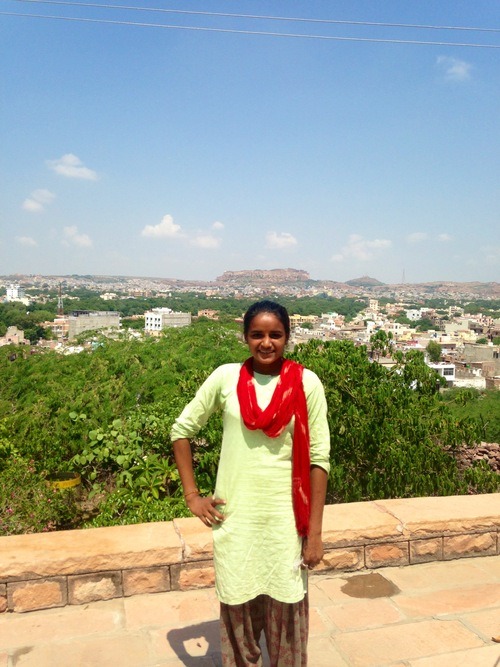
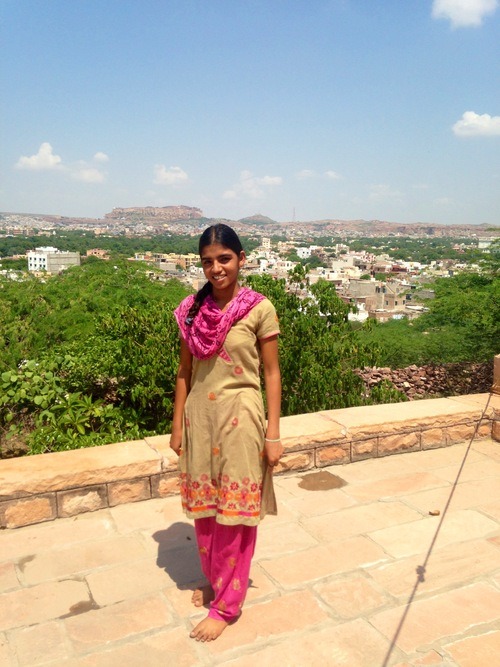
For my first installment, last month, I spoke to a group of young teenage girls I met at Sambhali, an incredible Jodhpur-based non-profit organization actively working towards empowering underprivileged Rajasthani women and girls through education, vocational training [such as sewing], self defense and more to ensure that they become confident, socially aware and financially independent individuals. I discovered the organization three years ago during a visit to Jodhpur, which happens to be my home-town and have kept in touch with them since.
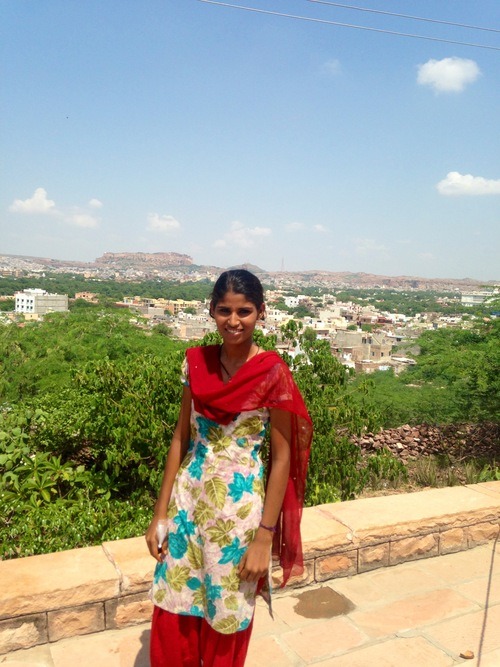
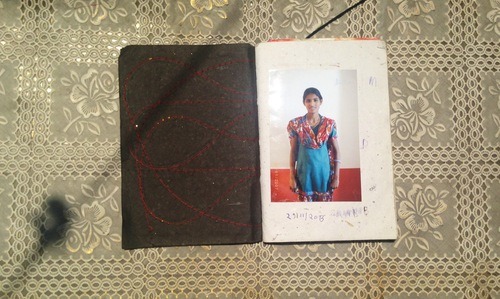
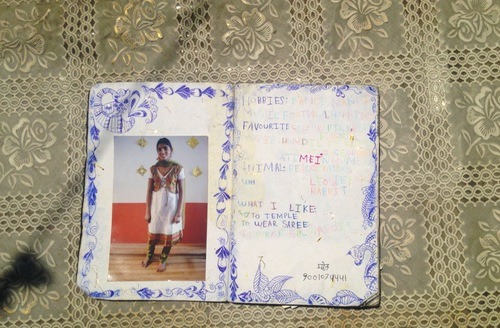
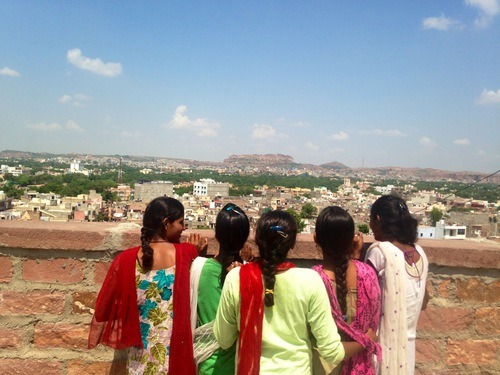
I spent a few hours with Mona, Pooja, and Aarti along with their friends, Sanju and Rekha, listening to them talk about their lives: their lives as child-brides, and the seclusion and insulation of their lives prior to Sambhali, how Sambhali has definitively and positively changed them, infusing them with so much self-awareness and confidence, and their aspirations and fears. Talkative, bubbly, inquisitive, protective, and philosophical, they in turn took me to their favorite Ganesh temple, their homes, their families, and lives.
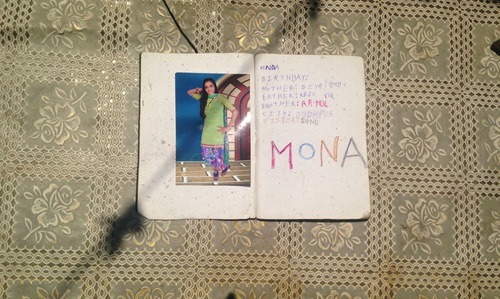
When I asked them about the objects that mattered to them the most, they interpreted the idea as the ones that would best represent them - and they each produced three notebooks-journals which were presented to them by a Sambhali volunteer. It contained their sewing and embroidery swatches, their photographs, and bits of information about themselves. Far from having a voice or agency of their own once upon a time, they had literally written and were continuing to write their lives into being. 

image
                                             Trio of Stories

image
                                                Mona, 15, Jodhpur

"Before we came to Sambhali, we just stayed at home…at the most, we went out to gather branches for the chula [wood-fired stove[. We never even went to school. I unknowingly got married when I was ten years old along with my older sister. Till date, I have never seen my groom’s face. We had no idea what our lives were all about. Coming to Sambhali has changed everything: we are now filled with so many hopes and dreams for the future."


image

image
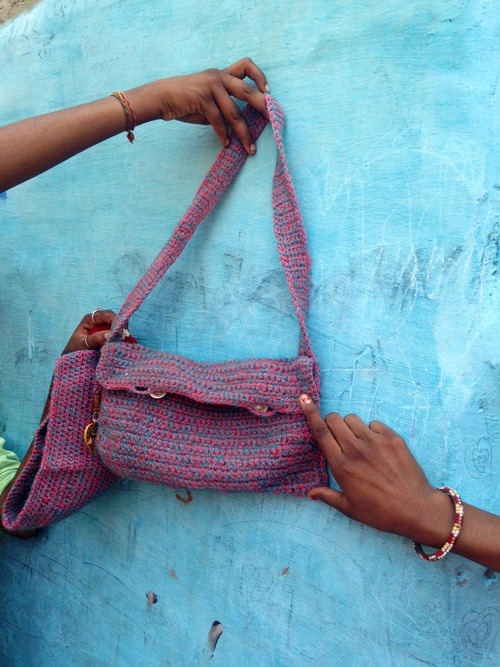
                                                Knitted Dreams
image
                                    Pooja, 16, Jodhpur

"Even after marriage, we want to keep on coming to Sambhali. We come here every day between 9-2pm apart from Saturdays and Sundays. On those days, we feel something big is missing from our lives."

image
image
                                              Aarti, 16, Jodhpur

"We had never even picked up a pen in our lives…and now we are learning English, Hindi and Maths. We have also participated in an English drama, done a video-photo workshop, and are learning boxing and lathi [baton] as part of self-defense. Earlier, we used to be hesitant about speaking to anyone…we now know how to approach people and address them. “

image
image
                                            Looking into the Future

"We want to be further educated. We want to sew and make things for other. We want to be something and stand on our feet."

I appreciated the opportunity of getting a glimpse into these girls' lives and thoughts through the medium of their notebooks. I do wonder what else they will fill these notebooks with; all I nevertheless wish is that they keep on filling the pages of their lives...and may there be hope and promise even in the blank pages.

What did you think of this first of the Object Stories? I would love to hear your thoughts!

----

With many thanks to the founder of Sambhali, Mr Govind Singh Rathore, the team, and of course, the spirited girls themselves for all their help in facilitating this feature!

May 14, 2014

Beneath a Starlit Sky: Thoughts on 'Highway' and Travelling in Rajasthan


Seeing the Light: a still from Highway

In an early scene of the recently released Hindi film, Highway (dir: Imtiaz Ali), we find its heroine, Heera (Alia Bhatt) stumbling across cracked earth beneath a star-studded sky. She is trying to escape her abductors, who ironically, have allowed her the freedom to attempt an escape. She is alone, petrified and stranded in an unfamiliar terrain.

Something powerful however happens beneath those starry skies and within the chamber of the desert's vast, unrelenting dark emptiness; Heera seems to experience an existential crisis of sorts in which it appears that she has absolutely no idea of her identity. Who is she? Why is she here? And what precisely is she escaping from? And more importantly, what is she escaping to? She eventually returns to her abductors, sobbing and barefooted having left behind her black ballet flats. The shoe analogy continues on in the movie, as we eventually see her in a different pair of shoes and - indeed, Heera appears to have shed her acquiescent personality and adopted another, embarking on a real and metaphorical journey, one that significantly could not have been possible had she still be donning her posh ballet flats. To further extend the shoe/costume analogy, as she transitions from one costume to another, she willingly sheds the garments of her former life for this new one. 

As I watched Heera run beneath the starry sky, I was reminded of a new moon night on a recent vacation in Florida. Given that so much excess light contaminates our urban night-skies, it was a veritable luxury to sit beneath such a clear celestial canopy. As we lay on the beach and examined the sky, using a phone app to identify the individual stars and planets, the sky was no longer just a mass of stars: it was a literal universe of stars with their attendant histories and identities. It struck me that while daylight inevitably conceals the stars, they are increasingly becoming invisible even during the night itself. One of my most vivid memories of that Florida vacation is the unadulterated clarity of the starlight and the pure silence of the sea at night. Thinking of the starried night sky in Highway, it made me revisit memories of my own Indian travels. Was I simply experiencing the outlines of the journey rather than being aware of and appreciating its specific details? 

As Heera contemplates the salt-encrusted earth in another one of the film's early scenes, she mentions that she did not know that she could journey to places as she is currently doing, so accustomed as she is to defining travel through a series of luxury hotels, restaurants, cars and tours. As viewers, we may not necessarily identify with the nature of the journey she embarks upon, both its interior and physical aspects and of course, the chilling circumstances leading to it – what her journey did compel me to do was to meditate on whether I have ever experienced the real India? 

As the film navigates the artery of roads in my home-state, Rajasthan, I remembered the countless road-trips I have taken in Rajasthan myself: yet, they were singularly focusing on one destination to another. I never stopped en route at villages: the huts, the people, and the animals simply flashed past me, as if I was scrolling through the busy homepage of a social media newsfeed. How much of the state and its character was I experiencing? What, indeed, was I experiencing of my country through my travels? 

Waiting for Rain: a still from Highway

The insularity of the comforting, almost soporific existence that Heera leads in Delhi implodes with the event of her abduction; she experiences life pared down to the simplicities such as the gorgeously shot scene in which she stands atop a damp desert dune moments before the clouds will rip apart and rain while her bemused abductors stand at the foot of the dune, obviously understanding her need to stop and reflect. As viewers watching the film, we are privy to being both, witnesses and participants, in Heera's growth; we travel with her through the land that she assumed was home and yet what she knows very little about. 

As a member of the diaspora, revisiting the homeland is always enmeshed in many issues: what are we returning to? This is a home, not the home; this is the home of our heritage but not necessarily the many other components that make us up. So, when we are visiting and travelling through the homeland, the issue primarily becomes as to what notion of home are we expecting to encounter: the ones that our parents and relatives have narrated to us through their stories and anecdotes? The images we see in books, magazines, and the internet? The ones that we significantly encounter in the great visual medium of movies?

I took this image in the courtyard outside one of my favorite Jain temples in Rajasthan just before dusk. Even though there is nothing decidedly pretty/post-card-y about this image, it best encapsulates the spirit of Rajasthan for me

Often, when in Rajasthan, I am unsure whether I wished to experience the Rajasthan that I had abstracted from my imagination, which in turn was inspired by all that I read and saw – or engage with the one that actually surrounded me, pretty at times but decidedly unglamorous and steeped in harsh realities on most occasions. 

Heera's route to discovering her country and herself in the process occurs when the trajectories of her life completely and dramatically veer away from the solidly established path she was walking upon. She literally steps upon the less beaten path, getting a glimpse into the many painful stories and realities that fill the lives of her fellow travelers. 

During my India visits, I often travelled on the AC coach in train-journeys; one distinctive feature of the coach was that the windows were yellow-hued, offering a sepia-tinted view of the vistas that flashed past: it was literally an exercise in nostalgia. 

When I next visit my homeland, I must make a conscious attempt to liberate myself of nostalgia and what my imagination demands and desires from me; I must see my country, my homeland, for what it is and relate to it as it is. It is time to shatter the tinted glass – and see what lies beyond it. 

Sometimes, it is not always necessary that you get a burst of inspiration and enlightenment in broad day-light; on some occasions, a sky full of stars can illuminate you a great deal more. 

*****

This piece originally appeared in India Currents 

Photo credits:

Highway stills: various internet sources

March 4, 2014

Journeying into the World of Words


Autumn Poetry

I can't remember what it was like not to write. What I do distinctly remember are the first lines that captured my attention and drew me into the world of words: they described rivulets of water streaming across a parched desert. As I read the words, vividly visualising the shining water and the dry, cracked earth, I thought to myself: I want to write. Too. 

My first poem was published in a children's supplement of a Dubai-based newspaper, Khaleej Times when I was eight years old. I was living in Muscat, Oman and the newspaper used to be delivered a day after its publication to our home. As we scooped up the newspaper and took out the children's magazine from its folds, I can still clearly recollect my little brother and parents' excitement on seeing my name in print for the first time. The title of the poem was quite simply My Little Pie. 

While other children participated in soccer tournaments, played in the band, or acted in theater productions, I wrote. My mother has still meticulously and lovingly preserved all the lined pads and notebooks in which I furiously wrote poems, mock-interviews, stories stylistically similar to my current favorite author (Ann M Martin of Baby Sitters Club and Judy Blume, for example), and journaled. My father would gift me yearly diaries that he did not happen to use and I in turn would fill up the pages with philosophical notes on whatever intrigued or puzzled or bewildered me. When I was in the sixth grade and studying Buddhism, I became so deeply drawn towards the religion that I must have written countless poems about karma and suffering and whatnot. Yes, sixth grade, folks!


Two of my books: Silent Moments and Into My Own World

By the time I turned thirteen years old, one of my mother's relatives and a poet himself, suggested that I get the poems published given the huge number I had already written; in fact, I had such a huge bank of poetry that I eventually ended up publishing two more poetry books in 11th and 12th grade respectively. As an extremely reserved child, for me, poetry was an outlet which enabled me to record, comment, commiserate, and express myself in a way that I otherwise would not have been able to. While many of the poems were entirely based on visual observations, quite a few of them also delved into my interior feelings growing up as a teenager. Now, when I look back on them, they also help reflect those junctures of my life in which I was passionate about the environment or Buddhism or even Bollywood. Perhaps, if blogging had been around when I was growing up, I would have blogged. Back then, though, what I could not verbalise otherwise I would do so through the medium of my poetry. 

However, a funny thing happened when I started university and began studying creative writing. One of our first tutorials was about writing poetry and also, what exactly was a poem and how a poem could be so much more than just a string of lines arranged upon a page. However when it came to my first assignment, I was in severe panic mode: there was just a day left before the deadline and I still hadn't come up with anything radical. One sleepless night later, when I woke up and absently glanced out of my window, I observed that the ground was strewn with fallen fall leaves – and I suddenly thought of the Bollywood film, Mohabbatein (2000) in which Shah Rukh Khan urges his students to pen their feelings upon...fall leaves. (Chalk up to SRK for inspiration!) I ran outside, picked up several leaves, scribbled down drafts of a self-conscious ode of being an autumn leaf, carefully inked it on my chosen leaf, and sealed it in a sandwich bag – and ran to the department just in time to meet the deadline. Yet, this was the first and last time I experimented with the structure of poem; afterward, I became so hooked into writing fiction that I entirely gave myself to short stories and it has been a long time now since I have written a single poem. 

Yet, I still write: I cannot imagine a life without writing and it will always remain my raison d'etre, the reason to be...it is still the first and most interesting way I make of my world (photography is increasingly come a close second though!) There is still nothing like experiencing the joy of assembling words together to re-create an experience or conjure up a character from thin air, as one is using individual ingredients to cook or bake an incredible dish. Whether I seek to reproduce an interviewee's thoughts or blog about an amazing holiday, writing is my bridge to the world – and it was my venture into poetry which taught me to do that. Will I ever write poetry again? Never say never!

**

This piece was originally published in Brown Girl magazine here

August 7, 2013

Nourishing the Past: An Ode to The Indian Grocery Store


Before I moved to the United States, I had little idea of the archetypical Indian grocery store.

 I grew up and spent my early adult years in Muscat, Sultanate of Oman, where there was a substantial Indian immigrant population; over there, it was almost akin to India...not-quite India, as I like to think of it. Apart from the matter of India physically being a mere two hour flight away, it was always readily available in abstract: home-made paneer, liquid idli mix, and Alphonsos in supermarkets, freshly made dosas and chaat, smell of sandalwood at temples, the latest movie releases and vernacular magazines and newspapers at bookshops, and saris displayed in stores. If you hungered to speak or hear your language, you could hear bits of it swirling around in the air, intermingling with the intense heat and scents and becoming part of the atmosphere. In my case, it was Hindi and for many years, I attributed my failure to learn Arabic to Omanis' legendary friendliness. On learning about one's lack of Arabic, Omani shopkeepers, taxi-drivers, and acquaintances would immediately begin conversing in Hindi or rather, Hindi purloined from Hindi films that they religiously watched and worshipped. 

Being part of the Indian diaspora, you are constantly wondering what constitutes home: what exactly does it represent to you? Whenever I would return to India after summer vacations, I would be terribly homesick: I missed the noise, activity, and energy that I had left behind in India and which was conspicuously absent in tranquil Oman. Sometimes, during those initial days while I navigated the cultural transition from my homeland to my adopted one, a warm twilight or the way the air smelt would trick me into thinking I was back in India. And yet, that moment would pass as swiftly as it had arrived – and I was back in Oman, a place where India was just almost within my reach.

During my university years, I moved to United Kingdom, where I studied in the Midlands; the gray skies, unrelenting rain, and the biting cold aside, I realised oddly enough that I had not been transplanted in as alien a land as I earlier thought I had been. When I woke up in the mornings, I could hear Hindi songs on the radio-stations. The cab-drivers spoke Punjabi and I often spotted women in saris and salwar-kameez walking around town. If craving for India became particularly acute, I could take a twenty-minute bus ride to the city's desi-town: there, I ate over-salted samosas, got my eyebrows threaded (in four minutes, flat!), rent out Yash Chopra DVDs, and window-shop the familiar bling-bling of the bangles, bindis, battuas, and outfits on display. In short, I would happily consume my idea of India before returning to university life. For some reason, I then never paid much attention to the grocery stores selling desi products though; I walked past them, only occasionally wandering in to purchase frozen paneer.

My journey looped me back to Oman once again and it was only a few months ago that I got married and moved to Pittsburgh, arriving in the dead of winter, surrounded by skeletal-limbed trees and acres of snow. There is nothing like the unending inkiness of an artic winter evening to make you indulge in a bit of soul-searching and I once again started to think more deeply about where I had come from – and this new place that I was going to call home for the next couple of years Much has been written about the crucial role of food in recreating and indeed, keeping alive the notion of the homeland amongst diasporic communities. It was only then I discovered – and appreciated the presence of the Indian grocery store in my midst.

As a newly married woman, turning to food to conjure up home and family when missing them became particularly acute (and not to mention, feeding my husband!), I realised most importantly that I would not have to make to do with substitutes. Sure, the land that I had moved in was unfamiliar and still alien to me; however, the food was not. Unlike Ashima Ganguli, who has to create an approximation, an ersatz version of the snack she so loved in the opening pages of Jhumpa Lahiri's The Namesake, I could precisely reconstruct a dearly remembered dish because of the readily available ingredients at the store. My experience as an immigrant woman greatly differed from women of earlier times, when migrating to different lands was almost tantamount to moving to a different planet, being transplanted in a vastly alternate cultural reality. Speaking of travel, writer Suketu Mehta mentions that for diasporic communities, music is the cheapest airline home; in my case, a perfectly made bowl of kadhi-chawal did just the trick! 


It wasn't just the process of purchasing and abstracting the food though; it was also the site, the Indian grocery store, which became equally significant for me. Unlike other places where I had previously lived and called home, this was the first place where I found myself most searchingly interrogating the Indian-ness that nestled inside me: what was it like to be an Indian living abroad? Like Hindu and Jain temples in the vicinity, which were both literal and metaphorical shrines, the Indian grocery temple too was a shrine to that Indian-ness – and upon entering the store, I found the waves of familiarity it radiated comforting and warm. I heard Hindi film music from different decades playing on shuffle in the background as I sorted through packaged paneer, parathas, naans, and rotis. I leafed through bundles of coriander, radishes, spinach, and green onions. I examined the numerous kinds of dals, rice, and masalas on display. If I so wished, I could buy Jain mithai or Dabur coconut oil or steel katoris. Samosas warmed in the grill; behind the counter, the hydra-headed Indian pantheon beatifically looked down upon me in all their divine iridiscence. 

Back home in Oman or even where I lived in United Kingdom, I had never been aware of a sense of longing for home or feeling so displaced from it. Yet, here, at this critical new juncture in my life, I found myself more sharply questioning my place in the scheme of things: what was the flavor of this new city? What did its people think about? What was this country, United States, that I was living in? As months have passed by, I find myself telling everyone that I am settling down into my new home. Yet, what does 'settling down' mean anyway? Isn't there a ring of stagnancy or even static to that statement? For those of us belonging to disaporic communities, ours is a nomadic existence, leapfrogging from one culture to another. Sometimes, it happens when moving from one country to another; other times, it occurs within the orbit of our daily existence, moving from our intimate spaces to the public ones outside. 

 For me, each country that I have moved to and lived in, however briefly, encases an embryonic home – following the initial period of acclimatizing to the place, I have set about incubating and nourishing it into existence. In this merry-go round of movement and transitions, though, you need something to anchor you down in order to stop and reflect and connect; for me, as I swim through the sea of multiple new experiences, I have found myself that island of India in the Indian grocery store. 

And so, a few days ago, finding myself hungry at lunch-time, I found myself walking to the Indian grocery store that coincidentally happened to be nearby and treated myself to a couple of samosas. Sitting outside beneath the brilliant, cloudless blue sky and feeling cherry blossom petals drift down upon me, I contentedly munched on my samosa, feeling my two worlds cheerfully and happily intersecting.

***************

This essay was originally published in the August 203 issue of India Currents magazine; you can read the article here

Images courtesy: various internet sources

July 15, 2013

The Singh Twins: Re-Imagining Indian Miniature Art


For the past few months, I have been contributing monthly posts about international women artists at International Museum of Women's blog, Her Blueprint; it allows me a window into their creative mindscapes, wondering what impels them to create what they do. I have so far written about several artists including Mona Kamal, Haleh Anvari, and Tulika Ladsariya, and Lamia Gargash, to name a few.

My first post was a commentary on the British-Asian miniature artists, The Singh Twins' work, whose re-imagining of traditional Indian miniature art I have long admired and pondered about. In this post, I explore their work by examining two of their paintings which particularly left an impact upon me.


An example of a miniature painting from Rajasthan


I have been a long-time admirer of miniature paintings, especially those originating from Rajasthan, the north-western Indian state which I belong to. However, while in awe of their beauty and technical finesse, I often find myself pondering the paintings' subject matter. Apart from the miniature artists' superlative ability to so effectively create and convey a microcosm through the minute, painstaking nature of their art, I also think much about the two-dimensional figures that populate these paintings. The ubiquitous presence of Hindu deities, kings and queens, courtiers, and their attendants: yet, who are they? What are they thinking? Why is it that they happen to be where they are in the paintings? At times, it seems that the lovingly detailed leaves conjure up a greater air of vitality than the figures themselves. The figures in turn are shrouded in mystery, performing within the painting and yet, their faces are impassive, refusing to reveal what lies beneath their perfectly manicured features. Indeed, these characters seem as anonymous as their creators. 

Many contemporary artists are nowadays engaging and reinterpreting the miniature art traditions, and when I encountered The Singh Twins' miniature art, I was fascinated and wished to explore more of it. 

Internationally acclaimed artists and twins who were born, raised, and work in the United Kingdom, Amrit Singh Kaur and Rabindra Kaur Singh, create their art together, hence, their moniker: The Singh Twins. Deriving inspiration from Mughal miniature paintings which they encountered during a trip to India, they were drawn toward the richness of technique and presentation -- and were keen to practice and revive the art traditions, which were otherwise in decline and neglected. Their artistic journey has witnessed them introducing the miniature art techniques and legacies to a wider audience while simultaneously interweaving contemporary narratives, themes, and issues into their work, creating a  vital, dynamic form of miniature art.

Examining two of their paintings reveal how they incorporate the miniature art traditions into their work while infusing them with their unique identities and perspectives.


Nrymla's Wedding II


At first glance, Nrymla's Wedding II (1985/6), depicting the mehendi (henna-painting) ceremony taking place for their sister, is layered with meticulous, beautifully ornamental detail, as per miniature art traditions; however, as one looks more closely, it is evident that the painting exists beyond mere aesthetics. With the post-modern aspect of artists themselves entering the frame, being both the creators and subjects, the painting also explores the interface of domestic and public spaces. A joyful, traditional atmosphere permeates the interiors, as evidenced by these signifiers: the dancing little girl, the bright-yellow dressed boy playing upon the drum, a videographer documenting the event, and a woman arriving laden with fruit. However, as the artists' commentary denotes, outside, for instance, we see the McDonalds' logo, a universal visual byword for globalisation and despoiling of the environment, triggering a debate about globalization and its impact upon cultural heterogeneity. The paintings are therefore no longer static, frozen moments; aesthetics and debate co-exist, encouraging the viewer to both admire the artistic traditions defining the work as well as being used a medium to create a space of interrogating contemporary issues.


Love Lost (2001) channels elements from the Persian miniature traditions while simultaneously being utterly modern; reinterpreting the tale of the traditional star-crossed Persian lovers, Laila-Majnun, the artists refer to it as being a commentary on the contemporary nature of love. This work demonstrates that while the artists showcase knowledge of various miniature traditions, they also playfully reinterpret styles and structure associated with each and imbue it with their personal artistic language. For example, rather than strictly adhering to boundaries (as typically seen in Persian miniature paintings with their thick borders), they literally step out of the box as seen through the presence of the car and ladder. The artists also draw upon various literary and cinematic romantic traditions in this visual commentary: the cell-phone clutching and television watching figures are Romeo and Juliet, Shakespeare's famous lovers whereas reference to a popular romantic Hindi films emerges through images of the films, Dilwale Dulhaniya Le Jayenge and Mughal-e-Azam. The combination of satirical commentary, mixed media, and traditional Persian art features make it an intriguing interpretation of both the traditional tale and technique. 

The Singh Twins' work is not as much a deviation from the miniature art fashion as broadening its scope for engagement with a global, contemporary audience; their work revitalises and reiterates the traditions while placing it in context to personal and contemporary global narratives. 

Please see and read more about The Singh Twins' work.

Photo credit: The Singh Twins' paintings' images courtesy The Singh Twins


April 22, 2013

Lamia Gargash: Stories of Interior Spaces


The Staircase, Lamia Gargash (2005-6)

I first discovered Lamia Gargash's photography in a British Council exhibition, My Father's House a few years ago; a travelling exhibition, its first port of call was at Bait al Baranda museum, Muscat and while I admired the other featured photographers' works, I instantly gravitated towards Lamia's images, particularly those of interior spaces that she had photographed.

As a child, I had always loved reading about interiors and how people chose to decorate their homes; what and how they put together their homes revealed so much about themselves. However, as I grew older, while my fascination for gorgeously and unusually assembled interior interiors remained undiminished, I found myself looking beyond the picture-perfect images in glossy interior magazines and websites. I realised I wanted to see more of interiors which were unvarnished, a little rough around the edges: faces wiped clean of make-up, so to speak. These were interiors with personalities and quirks of their own, in a constant state of evolution. 

Window Light, Lamia Gargash (2005-6)

While Lamia has since then worked with other subjects, I still retain my affinity for her 'Presence' series. Starkly devoid of people, these are piercing portraits of spaces - and yet, they are also portraits of those invisible inhabitants occupying those spaces as well, documenting their presence through the way they choose to present their most immediate spaces. I find her images of abandoned buildings and structures particularly haunting and powerful: even in or perhaps, because of their derelict state, they are palimpsests, each layer reverberating with voices and echoes and stories...only if you are willing to listen - and that is what precisely Lamia has accomplished through her images and coaxed her viewers to do so as well.

I was therefore thrilled to get the opportunity to speak to Lamia about her work via Khaleejesque and here is my interview with her reproduced below:
 
1) What made you choose photography as your medium of artistic expression?

Honestly speaking, as a child, I never ever thought of becoming an artist or photographer so it was a happy accident as to how I became one. When I had applied for my MA at Central Saint Martins, London, I actually applied for graphic design; however, I was then told that my work was more photographic and subsequently, placed in photography. I tried my best to get out of it as I wanted to pursue digital media; fate though had decided that photography was my destiny.

2) You mention in your biography that you were concerned with the relics of a self-renewing architecture and thereby documenting the private and public realms of Emirati architecture. Could you further elaborate on this statement in context to any of your particular projects?

I love what the camera captures, paying attention to details and using it to record and preserve what intrigues me. Space is a hub for many changes that occur around us; it dictates not only styles and eras but also a way of living. How a room is experienced leaves many stories within its walls. One always looks at the outside word as a sign of progression and expansion but the true essence of change occurs within our own quarters. How one identifies himself within his own room and how he chooses to present his individuality and persona through it is what’s exciting.

Through 'Presence,' I sought to document a culture that exists in interiors and becoming extinct due to modernization and globalization. When I first started this project, I was studying in UK; coming back home, I was more aware of the changes happening and felt the desire to document my old home – and the work developed from there. I documented homes of people, who were shifting from them to newer ones as well as recording abandoned homes.

People always ask me why there are no people present in my photographs. To me the spaces and interiors not only narrate stories of the lives that existed in them but also give the viewer an insight into our culture: how swiftly things change in our country, the rate at which things are being destroyed and built is probably more obvious in the space we inhabit on a daily basis than merely the exterior urban landscape.


The Orange Room, Lamia Gargash (2005-6)

Meelas-Yadee, Lamia Gargash (2005-6)

3) Many of these spaces are clearly private residences. How was it photographing these private and intimate spaces?

I found that documenting private spaces was much harder than taking someone’s portrait. Also, as we live in a quiet, conservative society, which admires and respects privacy so taking one’s photographs is quite a challenge enough – but taking pictures of their private spaces was even more challenging. Many perceived it as an intrusion and invasion of privacy to expose their most intimate spaces, whether it be kitchen, bedroom or even bathroom. They would question: why would anyone be interested in living quarters? Go photograph the garden or the sunset instead! Initially it was very hard but I gradually found a language by which I was able to communicate my message.


4) The Brownbook collaboration focused on the Emiratis' fixation with the label, Louis Vuitton. How did that materialize? What kind of a commentary were you making through this project?

The idea behind this project was to showcase the idea of the brand LV being submerged in our everyday lives and presented in a series of photographs that had a vintage feel. I am an avid film user and almost all my work is shot on film; despite the difficulties associated with its post-production, I love the anticipation of waiting to get my images back and not knowing what they truly look like. The use of film helped capture the mood that Brownbook and Louis Vuitton were looking for.

I was given a brief and asked to recreate it in candid old school shots. The idea was to keep the images as honest as possible. “Presence” actually was its visual guideline; the mood and style of the photographs inspired the creation of the Louis Vuitton series.


6) I found the 'Through the Looking Glass' project very relevant and topical, considering the almost obsessive preoccupation many people have their appearance. You include subjects belonging to both sexes and a spectrum of nationalities and ages. How did the participants feel about becoming involved? What did you take away from this project?

Through the Looking Glass investigates how we constantly view ourselves in comparison to an ever-elusive standard, prompted by the constant bombardment of media imagery dictating ‘how we should look’. Minor defects become drastic, resulting in even more drastic measures undertaken to reach that ideal standard of beauty. Our self- perception, and subsequently our identity, becomes indistinct, as if viewing ourselves through a distorted looking glass.
The photographic series comprises of diptychs, with one panel depicting a portrait of the subject as seen by the world, and an opposing panel depicting the subject as seen through their mind’s eye.
In many ways all the portraits I have created for this series is a representing of my own insecurities. We live in a world that is bombarded with information and supposed accepted norms be it behavior or physical appearances. I have to admit I am one of those people whose lack of confidence affects me on a daily basis and I was keen on expressing that simple emotion and capture it photographically.
Finding my models was a challenge too as not everyone wants to have themselves presented in such a manner; it was crucial to have committed participants as it was a very delicate, time/money-consuming project.
I found that females were more receptive and excited about the project than men; they in turn were more reserved. The people I worked with were co-operative and understanding; I couldn't have asked for a better crew or cast. I also would like to thank Emirates Foundation who helped fund the project.


7) Your projects have included a gamut of subjects and themes: architecture, fashion, and dynamics of perception. Your project, Yadee however revolves around your grandfather and is therefore much more intimate and personal. What made you take up this project? What was the journey like?

My grandfather was such a strong character in my family; he had a healthy, active, athletic persona, who loved life, travelling and being young. However, he had a severe fall few years back that shifted his whole world and in many ways affected him deeply. For me, coming to terms with the situation was hard and took a while. The series of images of my grandfather (who is still alive) merely captures the sad aftermath of the whole situation. It showcases vulnerability, sorrow and isolation. It is almost like being introduced to a whole new family member. I am a keen observer: I pay attention to so many details that it overwhelms me and the fact that I find it hard to accept change leaves me lingering in the details, trying to grasp whatever I can through my photographs. Every project I have documented or created was an outcome of personal melancholy or pure inner reflections.


8) Would you like to talk about any future projects?

I have been working on a variety of business creative ventures with my sisters and family; however, regarding my next photo project, it will be a marriage between my love of interiors and implementing more of the“self” in the body of work. I still believe that there is still a lot to investigate in the idea of space and that there is still plenty that it has to offer as creative material. After all stories take place in every room in every house, building and structure and allowing the spectator to form his own narrative. How space is constructed and how we choose to embed ourselves within it is inspiring for me.

**You can read the interview in Khaleejesque here**