Showing posts with label Rajasthan. Show all posts

December 22, 2014

Essay: Homesick in the Homeland


Yellowing

When I step outside, the soles of my shoes noisily crunch upon scattered yellowing leaves; I pick one up and twirl it around and around, my eyes idly locating the point where green becomes yellow, life blurs into decay.

However, these leaves are not fall leaves; in fact, I am living nowhere close to a place where deciduous trees flourish. I am in New Delhi, India and these are faux fall leaves only in my eyes. It is as if they have fallen and turned yellow simply to assuage a curious kind of yearning and homesickness I am experiencing for the last place I called home, the United States.

A year ago, I was standing in my Pittsburgh apartment balcony one morning, awe-struck in admiration at how the tree outside had seemingly turned blood-red over night. In the clear, sharp autumn sunlight, it gleamed deeply and brightly, the sidewalk below thickly carpeted with fallen red leaves. I remember scooping a few up and decorating my living room with them, mirroring the fall landscape outside. These days, as I glimpse one stunning image after another of fall foliage on social media, I can't help but reminisce about and miss America even though I am now technically in my homeland.

Perhaps, that is what lies at the heart of the matter: I am in my homeland...but not my home.

Having been born outside of and spent the majority of my life away from India, I and indeed, many of India's Currents readers are very well accustomed to being familiar with what it is to be nostalgic for the homeland. It is ever-present in the food we consume, the cinema that we watch, the clothes we wear, the compatriots whom we gravitate to, and the shrines, religious or otherwise we build within our home, in our quest to accept and reconcile with the fact that we are ultimately not in our homeland.

Even though I lived in India only as a small child and that too very briefly before moving to the place I would (and still call) home for the next many years, Oman, I would nevertheless find myself missing its sheer presence every time we returned from there post vacations. When I moved to the States, I would find myself acutely yearning for my home-town, Jodhpur, of all places, especially during the artic winters. Glimpsing the snow-blanketed landscape and nature at its most minimal, memories of the buzzing streets, vibrant festivals, iridescent clothing, and food would almost obsessively invade my mind. Even though technology allowed me to somewhat fulfill these above mentioned yearnings, it was never enough. To employ a food metaphor, I could recreate India in my plate but it was as if a mechanical, unfeeling had wrought it.

And yet, after I had arrived in India few months ago and began the gradual process of calling it home, I found myself in a peculiar dilemma; up till now, I had always essentially perceived India as a vacation space. I would arrive here, spend a few hectic weeks travelling around the country, and then, as vacation neared its end, inevitably begin missing Oman or wherever I happened to be living then. It was time to go back, I would tell myself. However, this time round, I realised I was no longer on a holiday: I was here to stay.

When I arrived in my new home, Delhi, I began to anchor myself to the notion of permanently living in India, as opposed to being a migratory bird. It was then I began to realise how much I missed the States. What also struck me was how the very things in India that used to delight or provoke curiosity or stimulate my attention made me almost blasé; what I had once yearned for was now omnipresent for my consumption, any time, any day. It slowly dawned upon me that I was in the curious situation of being homesick in what was ostensibly my homeland. The truth was that it never had really been my homeland: it was merely yet another new home in the caravan of countries that I had inhabited through my life.

Would it ever feel like home? I asked myself.


Nature's Child: Street-art in Shahpur Jat

A few days ago, I started to see how my question could be answered. I found myself at Shahpur Jat, a residential area in South Delhi, which was the subject of a pulsating street art festival earlier this year. My interest in street art had begun in Pittsburgh itself and I was now eager to experience street art in a Delhi urban context. When I arrived at Shahpur Jat, the almost-winter sun was disappearing into the dusk air. As I wandered through the narrow bylanes, excitedly spotting and admiring the fun, quirky, iridescent murals, I was simultaneously aware of an atmosphere entirely specific to the area. I passed by crowded biryani and tea and samosa shops, cute boutiques, peanut sellers roasting peanuts, fish for sale, and children and puppies alike playing in the streets while their elders sat outside rainbow hued doors and gossiped. 

Shahpur Jat streets

The deeper I explored the maze of lanes, shops, and houses, I felt as if I was transplanted in a similarly vibrant network of gullies in old Jodhpur, which I had so often missed when living in Oman or States. In fact, at one point, I glanced up to see an ochre-hued house draped with freshly washed carpets – and that sight immediately took me to Oman. 


An Oman-looking building

I had come looking for art in Shahpur Jat – but what I did not anticipate finding was home.

I moved to the country of my roots...to put down new roots. While it will be time before I can truly acknowledge the home in my homeland, the project focuses on looking with your eyes open, rather than remaining lost in the rose tinted spectacles of nostalgia. Also, significantly, knowing where to look. And one dusk evening, as you are wolfing down warmly roasted peanuts and smelling woodsmoke in the air, you will start thinking, that, yes, perhaps, this place could be my home, after all. 

**

This essay originally appeared here in India Currents

September 20, 2014

Object Stories: Mona, Pooja, and Aarti's Notebooks


In the last year, I became particularly preoccupied with the idea of photographing objects; the more I pursued object photography, I started thinking about the stories behind the objects and the notion that objects themselves can be stories.
What would happen if I brought together objects, people, and stories then? In my new photographic endeavor, Object Stories, I wished to engage in dialogue with people and ask about the significance of objects (or not) in their lives; and if they did matter, discover the stories behind the ones most precious to them. This project presents the people whom these objects belong to and the stories underlying the objects; it is also a work in progress, constantly evolving, resulting in a differently conceptualized and presented Object Story each time.
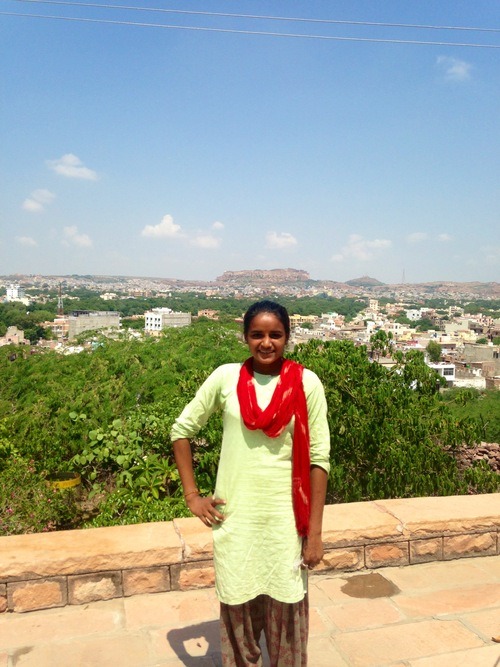
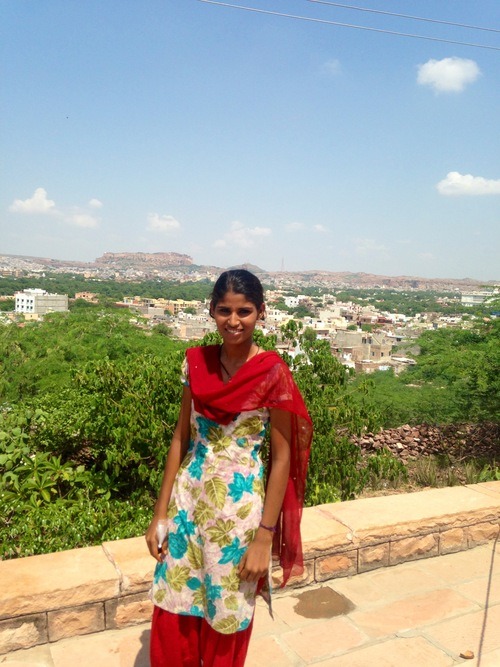
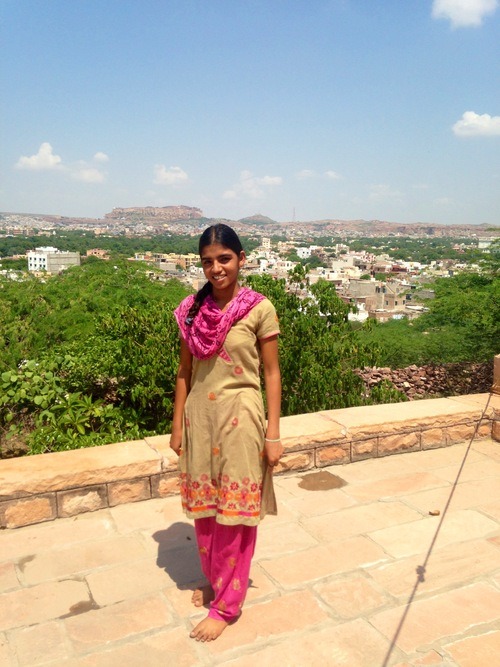
For my first installment, last month, I spoke to a group of young teenage girls I met at Sambhali, an incredible Jodhpur-based non-profit organization actively working towards empowering underprivileged Rajasthani women and girls through education, vocational training [such as sewing], self defense and more to ensure that they become confident, socially aware and financially independent individuals. I discovered the organization three years ago during a visit to Jodhpur, which happens to be my home-town and have kept in touch with them since.
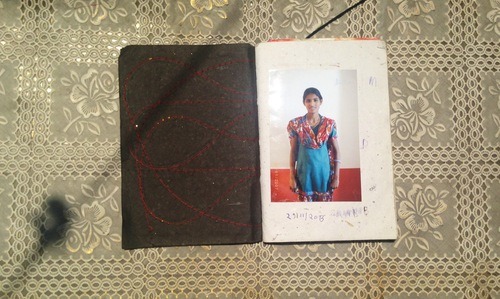
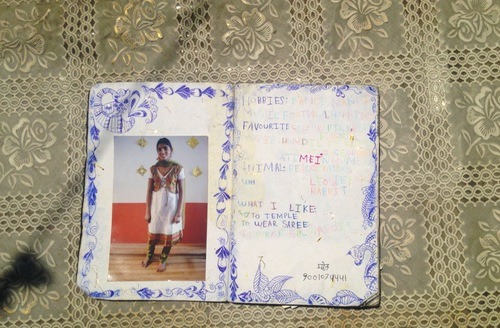
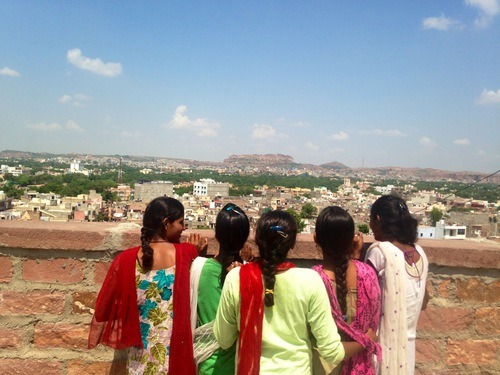
I spent a few hours with Mona, Pooja, and Aarti along with their friends, Sanju and Rekha, listening to them talk about their lives: their lives as child-brides, and the seclusion and insulation of their lives prior to Sambhali, how Sambhali has definitively and positively changed them, infusing them with so much self-awareness and confidence, and their aspirations and fears. Talkative, bubbly, inquisitive, protective, and philosophical, they in turn took me to their favorite Ganesh temple, their homes, their families, and lives.
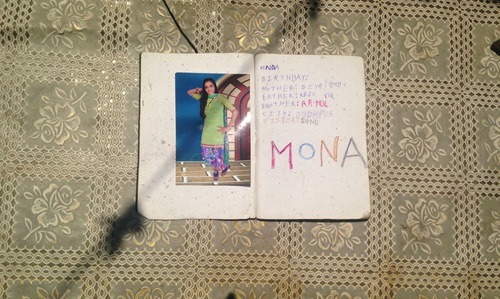
When I asked them about the objects that mattered to them the most, they interpreted the idea as the ones that would best represent them - and they each produced three notebooks-journals which were presented to them by a Sambhali volunteer. It contained their sewing and embroidery swatches, their photographs, and bits of information about themselves. Far from having a voice or agency of their own once upon a time, they had literally written and were continuing to write their lives into being. 

image
                                             Trio of Stories

image
                                                Mona, 15, Jodhpur

"Before we came to Sambhali, we just stayed at home…at the most, we went out to gather branches for the chula [wood-fired stove[. We never even went to school. I unknowingly got married when I was ten years old along with my older sister. Till date, I have never seen my groom’s face. We had no idea what our lives were all about. Coming to Sambhali has changed everything: we are now filled with so many hopes and dreams for the future."


image

image
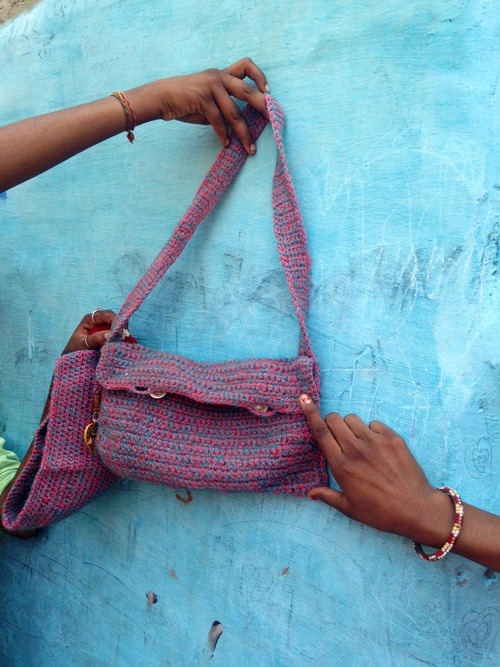
                                                Knitted Dreams
image
                                    Pooja, 16, Jodhpur

"Even after marriage, we want to keep on coming to Sambhali. We come here every day between 9-2pm apart from Saturdays and Sundays. On those days, we feel something big is missing from our lives."

image
image
                                              Aarti, 16, Jodhpur

"We had never even picked up a pen in our lives…and now we are learning English, Hindi and Maths. We have also participated in an English drama, done a video-photo workshop, and are learning boxing and lathi [baton] as part of self-defense. Earlier, we used to be hesitant about speaking to anyone…we now know how to approach people and address them. “

image
image
                                            Looking into the Future

"We want to be further educated. We want to sew and make things for other. We want to be something and stand on our feet."

I appreciated the opportunity of getting a glimpse into these girls' lives and thoughts through the medium of their notebooks. I do wonder what else they will fill these notebooks with; all I nevertheless wish is that they keep on filling the pages of their lives...and may there be hope and promise even in the blank pages.

What did you think of this first of the Object Stories? I would love to hear your thoughts!

----

With many thanks to the founder of Sambhali, Mr Govind Singh Rathore, the team, and of course, the spirited girls themselves for all their help in facilitating this feature!

May 14, 2014

Beneath a Starlit Sky: Thoughts on 'Highway' and Travelling in Rajasthan


Seeing the Light: a still from Highway

In an early scene of the recently released Hindi film, Highway (dir: Imtiaz Ali), we find its heroine, Heera (Alia Bhatt) stumbling across cracked earth beneath a star-studded sky. She is trying to escape her abductors, who ironically, have allowed her the freedom to attempt an escape. She is alone, petrified and stranded in an unfamiliar terrain.

Something powerful however happens beneath those starry skies and within the chamber of the desert's vast, unrelenting dark emptiness; Heera seems to experience an existential crisis of sorts in which it appears that she has absolutely no idea of her identity. Who is she? Why is she here? And what precisely is she escaping from? And more importantly, what is she escaping to? She eventually returns to her abductors, sobbing and barefooted having left behind her black ballet flats. The shoe analogy continues on in the movie, as we eventually see her in a different pair of shoes and - indeed, Heera appears to have shed her acquiescent personality and adopted another, embarking on a real and metaphorical journey, one that significantly could not have been possible had she still be donning her posh ballet flats. To further extend the shoe/costume analogy, as she transitions from one costume to another, she willingly sheds the garments of her former life for this new one. 

As I watched Heera run beneath the starry sky, I was reminded of a new moon night on a recent vacation in Florida. Given that so much excess light contaminates our urban night-skies, it was a veritable luxury to sit beneath such a clear celestial canopy. As we lay on the beach and examined the sky, using a phone app to identify the individual stars and planets, the sky was no longer just a mass of stars: it was a literal universe of stars with their attendant histories and identities. It struck me that while daylight inevitably conceals the stars, they are increasingly becoming invisible even during the night itself. One of my most vivid memories of that Florida vacation is the unadulterated clarity of the starlight and the pure silence of the sea at night. Thinking of the starried night sky in Highway, it made me revisit memories of my own Indian travels. Was I simply experiencing the outlines of the journey rather than being aware of and appreciating its specific details? 

As Heera contemplates the salt-encrusted earth in another one of the film's early scenes, she mentions that she did not know that she could journey to places as she is currently doing, so accustomed as she is to defining travel through a series of luxury hotels, restaurants, cars and tours. As viewers, we may not necessarily identify with the nature of the journey she embarks upon, both its interior and physical aspects and of course, the chilling circumstances leading to it – what her journey did compel me to do was to meditate on whether I have ever experienced the real India? 

As the film navigates the artery of roads in my home-state, Rajasthan, I remembered the countless road-trips I have taken in Rajasthan myself: yet, they were singularly focusing on one destination to another. I never stopped en route at villages: the huts, the people, and the animals simply flashed past me, as if I was scrolling through the busy homepage of a social media newsfeed. How much of the state and its character was I experiencing? What, indeed, was I experiencing of my country through my travels? 

Waiting for Rain: a still from Highway

The insularity of the comforting, almost soporific existence that Heera leads in Delhi implodes with the event of her abduction; she experiences life pared down to the simplicities such as the gorgeously shot scene in which she stands atop a damp desert dune moments before the clouds will rip apart and rain while her bemused abductors stand at the foot of the dune, obviously understanding her need to stop and reflect. As viewers watching the film, we are privy to being both, witnesses and participants, in Heera's growth; we travel with her through the land that she assumed was home and yet what she knows very little about. 

As a member of the diaspora, revisiting the homeland is always enmeshed in many issues: what are we returning to? This is a home, not the home; this is the home of our heritage but not necessarily the many other components that make us up. So, when we are visiting and travelling through the homeland, the issue primarily becomes as to what notion of home are we expecting to encounter: the ones that our parents and relatives have narrated to us through their stories and anecdotes? The images we see in books, magazines, and the internet? The ones that we significantly encounter in the great visual medium of movies?

I took this image in the courtyard outside one of my favorite Jain temples in Rajasthan just before dusk. Even though there is nothing decidedly pretty/post-card-y about this image, it best encapsulates the spirit of Rajasthan for me

Often, when in Rajasthan, I am unsure whether I wished to experience the Rajasthan that I had abstracted from my imagination, which in turn was inspired by all that I read and saw – or engage with the one that actually surrounded me, pretty at times but decidedly unglamorous and steeped in harsh realities on most occasions. 

Heera's route to discovering her country and herself in the process occurs when the trajectories of her life completely and dramatically veer away from the solidly established path she was walking upon. She literally steps upon the less beaten path, getting a glimpse into the many painful stories and realities that fill the lives of her fellow travelers. 

During my India visits, I often travelled on the AC coach in train-journeys; one distinctive feature of the coach was that the windows were yellow-hued, offering a sepia-tinted view of the vistas that flashed past: it was literally an exercise in nostalgia. 

When I next visit my homeland, I must make a conscious attempt to liberate myself of nostalgia and what my imagination demands and desires from me; I must see my country, my homeland, for what it is and relate to it as it is. It is time to shatter the tinted glass – and see what lies beyond it. 

Sometimes, it is not always necessary that you get a burst of inspiration and enlightenment in broad day-light; on some occasions, a sky full of stars can illuminate you a great deal more. 

*****

This piece originally appeared in India Currents 

Photo credits:

Highway stills: various internet sources

March 26, 2014

Of Being a Flaneur: Sam Miller's Delhi: Adventures in a Megacity and An Ode to Walking


Of late, I read two books which were preoccupied with the art of walking; the first one happened to be Julia Cameron's Walking in This World, which is a sequel to her highly successful book, The Artist's Way while the other was what I describe as a city biography, Sam Miller's Delhi: Adventures in a Megacity. In Julia's first book, which explores and encourages creative re-discovery, she mentions the idea of an Artist's Date and in her sequel, she introduces an additional tool, the Weekly Walk. "Nothing brings home the beauty and power of the world that we live in like walking," she writes in the opening pages."Walking often moves us past the "what" of our life into the more elusive "why.""


Sam Miller clearly subscribes to similar notions, describing himself as a flaneur. Incidentally, flaneur was always one of those stylish-sounding words that I saw everywhere - and yet, never bothered to look up its meaning! Well, here it is: flaneur, or someone who aimlessly wanders through the cities. In his quest to re-present Delhi in all its gloried nuances, Miller embarks upon a stylised walking tour of Delhi, diligently calculating a spiral-walking path through which to explore the city. "You will find out a lot more about a city by wandering through it than by visiting the homes of the well-off or by just exploring the ancient monuments. If you don't walk in Delhi, large parts of the city will be invisible to you," he says - and there in lies the heart of Delhi: Adventures in a Megacity. He industriously walks its streets, visiting places such as Nehru Place, Rohini, Ghazipur and Gurgaon (few of which I was not aware of until I read this book) and by doing so, he presents the vibrant, brutal, startling, and fascinating theatre of the streets and the neighborhoods: conversations, encounters, monuments, and shops. They simply would not have been available or accessible unless you had been physically in situ and walking through and experiencing it all; it is a bit like submerging yourself and snorkeling within the sea, rather than simply skating upon the surface.


Camouflage: Not the most practical of walking shoes, I know...I am an impractical walker!

I love walking myself. Not particularly inclined to other forms of outdoor physical activity, walking however is one such activity that I will happily indulge in. And while calling myself a flaneur would be a long shot, neither having the physical stamina nor an adventurous, curious explorer's instinct to warrant the label, I do like to walk around in new cities and places though as a means of getting a feel of what makes the place what it is: how its people converse, dress, eat, and look, the color and eccentricities of its architecture, even what is found scattered upon its roads and empty plots of land.

Swagatam: A brilliant colored ceiling above the entrance door at a house in old Jodhpur

One of my favorite places to walk in is the streets of old Jodhpur; once inside the warren of super-narrow, maze-like alleys and streets, studded with tailors, barbers, fruit juice stands, jewelry, sari, and beauty shops, temples, and whatnot, I feel as if I am literally in the city's arteries, getting closer and closer towards hearing its heartbeat. There is always so much going on: even the walls were crazily layered with film-posters, election campaign signage, and tuition advertisements, the alleys' hectic activity bleeding into the walls.

Plastic Angel: Electricity wire meets plastic

I didn't walk as much in Oman apart from night-time strolls, which were literally a form of exercise, rather than that of discovering and exploring. However, once I arrived in Pittsburgh, walking was the perfect way to acquaint myself with the city; armed with my phone and a new discovery called Instagram, walking went hand in hand with my photo-documentation and journaling of my new life. Indeed, as I browse through the pictures, I remember those walks purely due to the arresting sights I observed and captured: a house, a plastic angel shaped material entwined in electricity wires, and a lone chair in middle of a parking lot. The walks and the pictures in turn enabled me to forge a friendship with the place, making the unfamiliar familiar.

Zebra-Crossed
What suddenly strikes me is that when you leave a place, you feel that you will quickly forget those paths that you once regularly treaded upon, whose shapes and curves you knew by heart, and the houses and landmarks lining the route like old friends - and yet, the truth is that the mind still and will always retain those memory maps. At least, with me, I can still re-walk an old path in a place that I had once lived in by the sheer memory of the countless times I walked it. When I return and begin walking, it is a stranger - but only for a few moments before transforming itself into a friend once again. And so I carry on walking, as if resuming a conversation that we had left mid-sentence, indulging in nostalgia and acquainting with the new.

What do walks mean to you? Is there a place that you especially enjoy walking in? I would love to hear:)

PS Here is another photo-text ode to walks in my other (neglected) blog, Photo Kahanis...!

January 9, 2014

The Season of Kites: A Kite Falling


Flying High

Often, while writing at my desk, my eyes straying towards my six month old kite painting sitting there, I have begun to sense that it has been waiting to speak to me for some time. The painting itself is quite simple: a cut, stringless fuschia-bodied and yellow and turquoise ear and tailed kite flying/suspended in a monotone blue sky above a tree-top full of paper pieces of kite. I didn't paint the kite; I instead glued a miniature paper kite from a bagful that I bought from a stall in New Delhi onto the canvas. The pieces of kite in the tree too are from one half of another paper-kite that I mutilated in order to adorn my painting. I cannot recall what it is that I did with the other half: it presumably sits alongside the other intact paper kites, marooned and wingless. I call the tree in my painting kite tree.

 Late last January, while visiting Jaipur for a literature festival, I used to see these kite-studded trees wherever I went. I recognized the kite remnants as leftovers from the mid-January festival of Basant when Jaipur ritually climbed up to the flat-topped house roofs and participated in kite-flying contests. Those kite-trees still retained that spirit of festivity and celebration and seemed unwilling to relinquish this unseasonal cargo of theirs, this blossoming of mutated rainbow-hued flowers. These kite-trees figure amongst my most memorable memories of that particular January in Jaipur: translucent blue glass morning skies, melted butter sunlight, and those happy, fecund trees.

It was sometime ago when I came across an article referring to the kite-eating trees in the comic strip, Peanuts; those trees sounded carnivorous, a pirhana-like sounding avatar of the scarlet-faced Venus flytrap. My Jaipur kite-trees and the one in my painting were not hungry: they rather accepted the kite fragments into their fold with outstretched arms, as that of a mother, affectionately feeding the kites' illusion that they were still aloft. It was akin to snowflakes starring a black coat, allowed to briefly retain their original and inherent individuality, rather than falling and congealing into the faceless floor of snow. You would not demote beauty into detritus by mistaking those snowflakes for dandruff; how could you then mutilate maternity into Medea by conflating those kite-fragments as objects of consumption?

 I am focusing on the tree although I know that it is the kite in the painting which seeks to say something to me. Let us train our gaze towards it. My kite appears an Icarus, his feather and wax wings silhouetted against the sun, supremely confident in this moment of aerial triumph. And yet, if you peer more closely, my kite is not as much airborne as it is falling and in possession of the knowledge that it will ultimately bypass the cushioned security of the tree. My kite is falling. My painting is a photograph of a kite falling. And I am sitting here and watching it fall, unable to do anything. 

 When kites fall in my part of India, telephone, electricity and barbed wires often disrupt their descent to earth; it is common to see kites ensnared in knots of wires, gradually turning into shish-kebabs of fried paper and wood over time. Otherwise, they fall flat on their faces and are instantly submerged in anonymity, becoming as non-descript as the nearby discarded wastepaper. At their luckiest, the kites will glide down onto lawns of house gardens; their prospective owners, the neighborhood boys will then cluster around the main entrance gate, unguently calling out to whomever they see to fetch the kites; sometimes, people of the house oblige, sometimes, they don't. The boys immediately squabble if and when the kite comes into their possession, fiercely arguing over who is legitimately entitled to acquiring this prized trophy of a furiously fought sky-duel.


Spot the Kite

I saw a kite fall this July. I was standing outside in my uncle's garden, contemplating whether to write in my journal or finish reading Harry Potter and the Half-Blood Prince. The air was sepia-colored, the clouds melted burnished brass, and the atmosphere thrummed with the kind of anticipation akin to that before a theatre performance. I finally sat down on a three-decade old viridian green metal bench, having abandoned both the book and journal for gazing hypnotically up into the blanched pink evening sky. There were kites too in the air: black rhombuses hovering parallel to each other, their strings pencil lines across the firmament. A baby cried; the music store next to the bakery across the road was playing a popular Hindi film song from four summers ago, instantly transplanting me to a similar evening then, redolent of the familiar odor of unwatered dust, growth, and the charged, electric finale to a deadening, hot, dull day. It was as if today had never existed and yesterday was static. I found myself holding my breath, afraid that if I exhaled I would never recover what I had just so serendipitously discovered. 

The dog heard it fall before I did. It started barking and bulleted from the house and onto the white marble verandah. The baby had stopped crying and I saw that a kite had fallen amid the stumps of the recently amputated lime tree. In the diminishing dusk light, the kite was pale-colored and sickly and I instinctively knew that no one would come to fetch and fight for it. It was destined to remain in that armless embrace until the sun and monsoon rain bleached and sheared it away into becoming a skeleton once more, returning it into the form from which it had originally grown. It had fallen and how: an ignominous descent for it remained in the limbo of falling and yet not having actually parachuted to the ground. It was a kite ghost: never to be trampled to mutilation, never to be worshipped as a trophy, and never to glamorously electrocute itself in dramatic pyrotechnics on electric cables. I wished then I could say that it was a beautiful sight, the fallen kite and the newly-turned kite tree. I could not, though, no matter how much I tried to photoshop tragedy: the kite was now merely a flat diamond shaped piece of paper and the tree, reduced and atrophied.

 I think I am beginning to understand what the kite in my painting is speaking about to me and why. It is asking me where it is falling. You are just part of a painting though, I should respond, there are no brackets to your story; the painting is the story in itself and like every other spectator, I too wonder where the kite is falling. This is the way I should respond. But I cannot. What is the use of starting to narrate a story that you cannot complete? Does not the story-teller have the right to know the ending of his story considering he is its very first audience? I am the story-teller in this case and I must find out where the kite falls. Unlike Daedalus, I could not warn the kite of the dangers inherent in the pleasure of flight; unlike Daedalus, though, I can surely narrate it the story of its fall. 


***

Note:

Come January and I reflect upon the many wonderful winter trips I have taken to Rajasthan during this month in the past. What with the festival of Makar Sankranti coming up, which marks the arrival of spring and witnesses many an iridescent kite dotting the sky then in Rajasthan and Gujarat, for example, I was reminded of this piece which I wrote several years ago. It was interesting to revisit it, both in terms of nostalgia as well as the writer that I was and the literary and stylistic sensibilities influencing me then.

P.S I unfortunately do not have a picture of the painting I write about in the essay. I still have these paper-kites though and some of which I have used to adorn my home, which I have depicted in this post. However, what to do with the remaining kites? Perhaps, it is time for another painting.

This essay originally appeared in Blood Lotus literary journal's Issue 8, March 2008; read it here

November 4, 2013

A Royal Blue Story: How I Came To Wear the Rajput Poshak


**

Rajput poshak: the traditional dress of women of Rajput community in the north-western Indian state, Rajasthan; consists of kanchli (inner-wear with sleeves), waist-length kurta (a sleeveless blouse), ghagra (pleated skirt), and odhna (long, flowing veil).

**

First, there is the color: blue, royal blue, eye-wateringly blue.
**

Jodhpur, India, June 2010:

Since I first began blogging in April 2011, the most popular post on my blog, I am Just a Visual Person till date happens to be the one about the Rajput poshak. Glancing at statistics identifying traffic sources bringing visitors to my blog, 'Rajput poshak' often pops up in the list. There are people in Hong Kong, Sweden, United Arab Emirates, and France all turning to the virtual world to learn more about the poshak. Their fascination in turn never fails to fascinate me.

My own preoccupation with the poshak happened only recently. I had grown up seeing women dressed in the poshak whenever I visited my home state, Rajasthan; yet, it was if I was seeing through them, almost as if viewing them upon a mannequin. I only suddenly desired to wear it when I attended a distant cousin's wedding in the summer of 2010 in Jodhpur. During the musical celebrations, I observed that six of his girl cousins had worn the poshak in multiple marriages of color, texture, and shades: turquoise and rose-pink, lime-green and orange, satin and net, and tie and dye and gold-lurex embroidery. When they moved about the wedding grounds, they appeared like sartorial swans, gracefully separate from the rest of us. Later, as they shimmered and shimmied about on the stage amid the faux and real flowers, traditional Rajasthani musical notes seeping into the hot, monsoon-pregnant air, I felt transported into an alternate, genteel reality.

I decided to get a set made for myself.

Unlike the sari, which is recognizably a pan-Indian garment and whose appearance and presentation varies from state to state, the poshak is distinct and indigenous to Rajasthan. While I have never been averse to wearing traditional Indian garments, such as the salwar-kameez [tunic and loose/straight-cut trousers] I never ventured into wearing the sari simply because I had yet not mastered the art of draping it. I publicly declaimed the significance of the sari still continuing to be relevant in contemporary India, unlike, say, the status of the kimono in Japan where it largely held ritual significance. Yet, in private, I hardly wore the sari, perceiving both the act of placing and wearing the sari as cumbersome.

I should also mention that the aforementioned blog-post is not exclusively about the poshak; it is also about the Hindi film, Zubeida (2000), which revolves around a feisty, head-strong Muslim girl, Zubeida who marries a Rajput king, who once ruled a princely state [prior to Independence, India was formerly ruled by British and princely states]. The film is set in newly post-Independent India, where princely rulers were renegotiating their political place in the new social and political order and unlearning to rule. It was therefore a time of metamorphosis and unbreaking rules – and in midst of this, we witness Zubeida transitioning from 50s Bombay saree soiree chic into a Rajput princess, wearing petal-hued chiffons and pearls and gorgeous, elaborate poshak with delicate Rajasthani jewlery.

Was it a yearning for donning the romance of that elegant, bygone era? What I associated with the poshak was a regal elegance and which was easily accessible. For me, it was bit like jigsawing a puzzle together: I simply had to slip into the dual panelled top and the wide, ankle-length skirt and drape the odhna around me – and that was that. Wearing it would make me feel not as much exotic as much as exotically anonymous, as if I had jettisoned off the various layers constituting my identity: Indian, living in Oman, born in Australia, spoke Hindi but dreamt in English. The poshak would wear me and I would wear it: for me, it was the ultimate costume.

**

July 2011, Jodhpur, India:

The next summer, one of my relatives told me about the best place in town to purchase and have the poshak material tailored. After navigating numerous labyrinthine arteries of alleys in the heart of old Jodhpur, we finally found ourselves facing the facade of a nondescript two-story whitewashed shop. Upon entering the shop, we stood at the edge of a large room entirely covered with acres of fabric in multitude shades and patterns – and dozens of women examining and critiquing them. “What are you looking for?” A slight man in gold-framed spectacles asked me. “A poshak,” I murmured. “What for?” I wondered how exactly to put it that I simply wanted a poshak to dress up in. The last time I had attended a costume party was at university and it was an unoriginal costume even then. Owning this poshak would be the closest thing to dressing up in costume, transforming myself into an aristocratic Rajput lady, apogee of elegance and grace. “I have been wanting to get a set made for quite sometime,” I finally said.

“We sell material for every-day poshaks here...why don't you go up for the more fancy ones?” he said. Upstairs, wherever I looked, I glimpsed stacks of poshaks wrapped up in plastic and sitting behind glass-fronted wall cabinets or laid out on the thin grubby-white cotton-sheeted mattresses; adjacent to the room, there were ceiling-high bales of freshly dyed fabrics in a tiny storeroom. I longed to go there, feast my eyes upon all that gluttony of color. Meanwhile, the noises and smells of the street drifted into the room from the balconies – but they were incidental to the atmosphere, like an irrelevant, random thought.

It did not take me long to purchase my poshak despite the overwhelming buffet of choices offered; the salesman efficiently helped me pick out a chiffon-overlaid satin poshak with net dupatta in royal blue and embroidered with a constellation of golden gota [gold-lurex] buds. Glimpsing the material, I could hardly await its abstraction into the poshak – and how it would feel like to wear it.

As I was leaving the shop, the salesman called out to ask me as to what jewelry I was planning to pair the poshak with. “If you want to bring out the beauty of the dress, you should only wear Rajput jewelry,” he said, directing me to the whimsically named Fancy-stores, where you could buy practically anything to dress up your wrists and hair and hands and fingers. “Will you cover your head? Will you wear bangles? Where will you wear it?” The questions rained down upon me. “I will be wearing it outside of India,” I finally told them. “Good, good,” one of them said, visibly pleased. “The foreigners should know what the Rajput poshak is all about.”

A week later, I got a call from the shop: the poshak was ready. I went and collected the parcel: it was immaculately packaged in cellophane and adorned with a gota bow. I was both reluctant and longing to open it. In the end, it took me almost two years to eventually open the package and wear it. There was never a good enough time or occasion or place to wear it. In the meantime, I had another poshak – burnt pink and gold - tailored for my wedding ceremony, when I would walk around the holy fire seven times and become wedded to my husband. It was my third outfit for the day and when I was changing, I remember feeling disappointed for it fit badly, hanging loosely and vaguely from my frame: it looked like it had been made for another person. Perhaps, it was: memories of that night were a fluid blur, much like the poshak, as I transitioned from one life to another. I have packed it away along with the rest of my other wedding outfits. But the royal blue poshak still awaited its story.

**

September, 2013: London, United Kingdom

I am at another wedding: my best friend got married a few hours ago in a stately Roman Catholic church. Her bridesmaids and I, the maid of honor, had been identically hued in sea-green saris; now, as we changed for the reception to be held later that night, I reverently unpacked my royal-blue poshak. Slipping it on, tying up the blouse strings and adjusting the skirt, I was relieved that this poshak at least fit me perfectly. As I walked through the avenue of mirrors lining the hotel lobby, I felt like a comet of blue, this surreal Rajput transplant in a wedding reception in a hotel in middle of London. Throughout that night, I felt the glamour of make-believe constantly brush past me, deliciously out of the orbit constituting my normal life.

The reception concluded, as we bid farewell to our newly married friend, one of the hotel staff rushed in, cradling a massive bouquet of chrysanthemums in her hands: they gleamed cold pink, orange, and yellow and she was contemplating what to do with them. My friend and I offered to take them and as we waited outside the hotel for our cab, cradling the mums in my arms and the blue of the odhna threaded in between the stems, I idly reflected that my poshak and the night ceiling mirrored each other, a contented party of mutual admiration.

**

October, 2013, Pittsburgh, United States:

I am now in my new home. The poshak tidily sits in a package in my suitcase, which houses all my traditional clothes and that I occasionally wear in my life here. Whenever I open the suitcase and the saris and salwar-suits and the poshak come tumbling out, I can't help but feel that it is the equivalent of a dress-up box found in playrooms and drama classes, where you could borrow a quirky shoe or a pink feather boa and assume another self. When I unfold the poshak and lay out its royal blueness upon the terrain of my present life, I see so many things escape its folds and rise in the air: Rajasthan, Rajput princesses, elegance, chic, beauty, and nostalgic texture. The air subsequently becomes charged and heady – and this is why costumes are such necessary things, to remind us that it is good to come out and play every once in a while.

**

This piece was originally published in the online literary journal, Equals Record's Masks and Costumes issue here

October 22, 2013

Of Ghost Clothes and Photographs


Portrait of a Dress (2013)

"Do clothes have ghosts, or do ghosts have clothes? There's no evidence one way or the other, as you might expect: but there are stories, some of which survive long after their telling."

-Ghost Dresses, My Mother's Wedding Dress: The Life and Afterlife of Clothes, Justine Picardie (2006).

I have talked about what clothes represent and signify to me here and as time goes by, my interest in notion of clothes being personal narratives and how they function as markers of different cultures, eras, and societies has further deepened. Of late, I have been on the hunt for compelling fashion writing and so I was pleased to discover Justine Picardie's memoir, My Mother's Wedding Dress: The Life and Afterlife of Clothes. A collection of poetic, beautifully written essays about how fashion (in form of specific items of clothing, literature, and fashion designers) has shaped the author's life, there was one particular essay which particularly intrigued me, Ghost Dresses and whose opening lines I have quoted above. 

It struck me that one of the reasons why I so enjoy looking at vintage photographs of people is to study the clothing/fashions that they are wearing. A few years ago, Scott Schulman had a feature on his blog, The Sartorialist in which he posted and mused about photographs he had found in a box at Chelsea Flea Market; he subsequently invited readers to submit vintage images of their family and friends - and these contributions were portraits in every sense of the word, the clothes bestowing clues about the subjects' quirks, preferences - and indeed, visually encapsulating very much of who they were exactly at that moment. Another incredible resource which I love returning to is Anusha Yadav's Indian Memory Project, which is dedicated to documenting Indian subcontinent's visual and oral history via family archives; as you browse through the images and read the accompanying stories, you will often observe contributors making references to the clothing the subject wears as much as a means of identifying the era in which they were photographed as well as how it enriches the understanding of the subjects and their stories. 

Group portrait of Rajasthani women and children, c.1920 (courtesy Tasveer Journal's exhibition, Subjects and Spaces II)


Lady at Toilette, c.1910 (courtesy: Tasveer Journal's exhibition, Subjects and Spaces I)

The Indian online photography magazine, Tasveer recently published its series, Subjects and Spaces, which dealt with the representation of women in Indian photography between 1850-1950. These two pictures are amongst the many which reflect the conjunction of photography in colonial and newly independent India and the role and presentation of Indian women in that time period. Whether its individual or group portraits, the exhibition gives fascinating insight as to what it meant to be photographed for the women and alternately, how it was to photograph them; whether it is noting the minutiae of the background details or how they posed and with whom or the garments, the underlying subtexts of the photographs are laden with stories.


Dancing, c.1872
I would like to share a story, which is an intersection of vintage photography, fashion, and ghost clothes. Three years ago, I bought a vintage photograph of two (presumably) aristocratic Rajasthani women from a Jodhpur antique store. I browsed through stacks of photographs before finally deciding upon a hand-tinted one of two smiling women posing next to a decorative pillar; they were dressed in lengha-choli, their heads covered. Clearly not just content with introducing color into the women's monochrome lives, the artist also limned their jewelry with glitter, blurring the line between painting and image. I remember thinking that the combination of the image being hand-tinted and vintage meant that the women looked as if they had been photographed underwater. 

I had the photograph framed and packed it in a nest of scraps of old cloth and newspaper and carted it off to Oman; after spending quite some time deciding where to place the photograph in my room, alternating between my desk or my dressing table, I eventually propped it above the rectangular mirror. Whenever I was writing at my desk, I would absently glance at the photograph and eventually, I thought of building a long novella or short novel around these anonymous women: who were they: mother and daughter, posing for a special occasion? Where were they posing and had they worn their special-occasion outfits? How did they feel about posing for a photograph? Had they been in purdah? If so, were they happy to be seen and not invisible, for once? I visualised the photograph being part of the book-jacket, reminiscing in the afterword about it being the visual and direct inspiration for the book.

As weeks passed, I could not pinpoint as to why I started to feel uneasy whenever I looked at the photograph; in turn, I felt that the smiles on the women's faces were less pronounced, conveying a discernible lack of cheer. Even though I valiantly attempted to construct a story around them, it was as if the women in the photograph resisted being written into the narrative.

I eventually decided that I could no longer have the photograph in my room; it was as if neither the women nor I were at peace and we should part ways. I could not bring myself to summarily dispose it in the trash so I decided to consign them to the sea instead. When I went to the beach, I gently placed them in the lap of the sea and prayed for their well-being. Why I did so, I do not know: both the prayers or the act of donating them to the ocean. All I knew that was I stood there and watched them float away in the sea until they gradually disappeared out of my sight.

Do clothes have ghosts, or ghosts have clothes? Some questions will be unanswered...